❦
Tuesday, 10 April 1877
In spite of all my efforts, I fell asleep at eight in the morning.Mardi 10 avril 1877
— Well, how are you, Mademoiselle? Rosalie asked me, leaning on the bed as she used to.
- Eh bien comment allez-vous Mademoiselle ? me dit Rosalie en s’appuyant sur le lit comme avant.
— Better, well, thank you, I said, after a hesitation during which I held back a “How is Bijou?” that would have torn my lips.
- Mieux, bien, merci dis-je après une hésitation durant laquelle j’ai réprimé : comment va Bijou ? qui m’aurait déchiré les lèvres.
I dress in silence; the silence weighs on me horribly. Maman is in tears in the drawing room; Rosalie watches me furtively and speaks in a low voice, as though there had been a death in the house.
Je m’habille en silence, ce silence me pèse horriblement. Maman est éplorée au salon; Rosalie me regarde en dessous et parle bas, comme si il y avait un mort dans la maison.
Eh, I am not even ill! Divine justice!
Eh je ne suis même pas malade !! Justice divine !
I am dressed, and fresh!
Je suis habillée et fraîche !
— Rosalie, I said, in a voice that has been lifeless since yesterday, has there been any talk of Monsieur le comte downstairs?
- Rosalie, dis-je d’une voix éteinte depuis hier, a-t-on parlé de Monsieur le comte en bas ?
— No, good heavens, no, what would you have them say…
- Non, mon Dieu non, que voulez-vous qu’on dise...
written across the page
Everyone is asking after my father’s health. We have received a reassuring letter. The lie was a good one.
en travers Tout le monde s’informe de la santé de mon père. Nous avons reçu une lettre rassurante. Le mensonge était bon.
— So nobody knows anything. Nobody must know. Poor Bijou…
- Alors on ne sait rien. Il ne faut pas qu’on sache. Ce pauvre Bijou...
— I do not know whether it is because there was so much talk about it…
- Je ne sais si c’est parce qu’on en a tant parlé...
— Ah, yes.
- Ah oui.
— But it really did affect me.
- Mais ça m’a fait quelque chose vraiment.
— And what about me! Ah! it is a sad ending, Rosalie… I am sorry now.
- Et à moi donc ! ah ! c’est une triste fin, Rosalie... Je regrette à présent.
— It gave me the strangest feeling, there was so much talk about it…
- A moi ça m’a fait un effet tout drôle, on en a tant parlé...
— That is not why; it is because Monsieur le comte is kind, everyone likes him.
- Ce n’est pas pour ça, c’est parce que Monsieur le comte est gentil, tout le monde l’aime.
— He looked very happy when I went to call him back.
- Il avait l’air bien heureux lorsque je suis allée le rappeler.
— When?!
- Quand ?!
— Yesterday, when you sent me…
- Hier, quand vous m’avez envoyée...
— Where did you find him, what did he say? I forgot to ask you all that. Tell me!!
- Où l’avez-vous trouvé, qu’a t-il dit ? J’ai oublié de vous demander tout cela. Dites !!
— Oh, good heavens, Mademoiselle, do not make me laugh — you are laughing! I wanted to tell you seriously…
- Oh mon Dieu Mademoiselle, ne me faites pas rire, vous riez ! Je voulais vous le dire sérieusement...
— I am not laughing… I am listening.
- Je ne ris pas... j’écoute.
— Well, he looked pleased, he said, yes, yes, I am coming this minute; and going up the stairs he said to me: Rosalie, you are an angel!
- Eh bien il avait l’air content, il a dit, oui oui, je viens à la minute; et en montant il m’a dit: Rosalie vous êtes un ange !
— I asked him why, and he answered: because you have come to fetch me.
- Je lui ai demandé pourquoi et il m’a répondu : parce que vous venez me chercher.
A joke like any other, no doubt, but very much to the point.
Une blague comme une autre sans doute, mais très à propos.
The doctor came for my throat; it is my throat he is treating, having recognised that the other illnesses did not exist.
Le docteur est venu pour ma gorge, c’est ma gorge qu’il soigne ayant reconnu que les autres maladies n’existaient pas.
He is in Rome. If you knew all that I long to suppose, to invent, to imagine. If you knew how I follow him step by step, from the Hôtel de Rome (that is where he always stays) to the Corso, to Spillmann’s, to Mortes’s, to the Opera, to the Pincio, to the racecourse. I close my eyes and I follow him…
Il est à Rome. Si vous saviez tout ce que j’ai envie de supposer, d’inventer, d’imaginer. Si vous saviez comme je le suis pas à pas, de l’hôtel de Rome (c’est là qu’il va toujours) du Corso, chez Spillmann, chez Mortes, à l’Opéra, au Pincio, au Champ de Courses. Je ferme les yeux et je le suis...
Rosalie has just handed me his card, with those three letters written like Violette’s letters: P.P.C.1
Rosalie vient de me remettre sa carte avec ces trois lettres tracées comme les lettres de Violette, P.P.C.
Is it mockery or compassion?
Est-ce une moquerie ou une compassion ?
Why write to me… if he had not written to me… Rosalie was going to Florence, and perhaps I was going there myself.
Pourquoi m’avoir écrit... s’il ne m’avait pas écrit... Rosalie allait à Florence, et j’y allais peut-être moi-même.
This card… yesterday, as I opened the last book but one, my hand came upon his handkerchief, which I had tucked between the pages. I assure you it felt like a hot iron; I snatched my hand away and very nearly fainted, breathing in the scents he always uses.
Cette carte... hier en ouvrant l’avant-dernier livre, ma main a rencontré son mouchoir que j’avais fourré entre les pages. Je vous assure qu’il m’a fait l’effet d’un fer chaud, j’ai retiré la main et je me suis presque évanouie en respirant les parfums qu’il emploie toujours.
This handkerchief is attached to the first page of this notebook. [Missing from the manuscript]
Ce mouchoir est attaché à la première page de ce cahier. [Manque dans le manuscrit]
There is no lack of mementoes. Never in my life shall I wear violets.
Les souvenirs ne manquent pas. Je ne porterai jamais de ma vie des violettes.
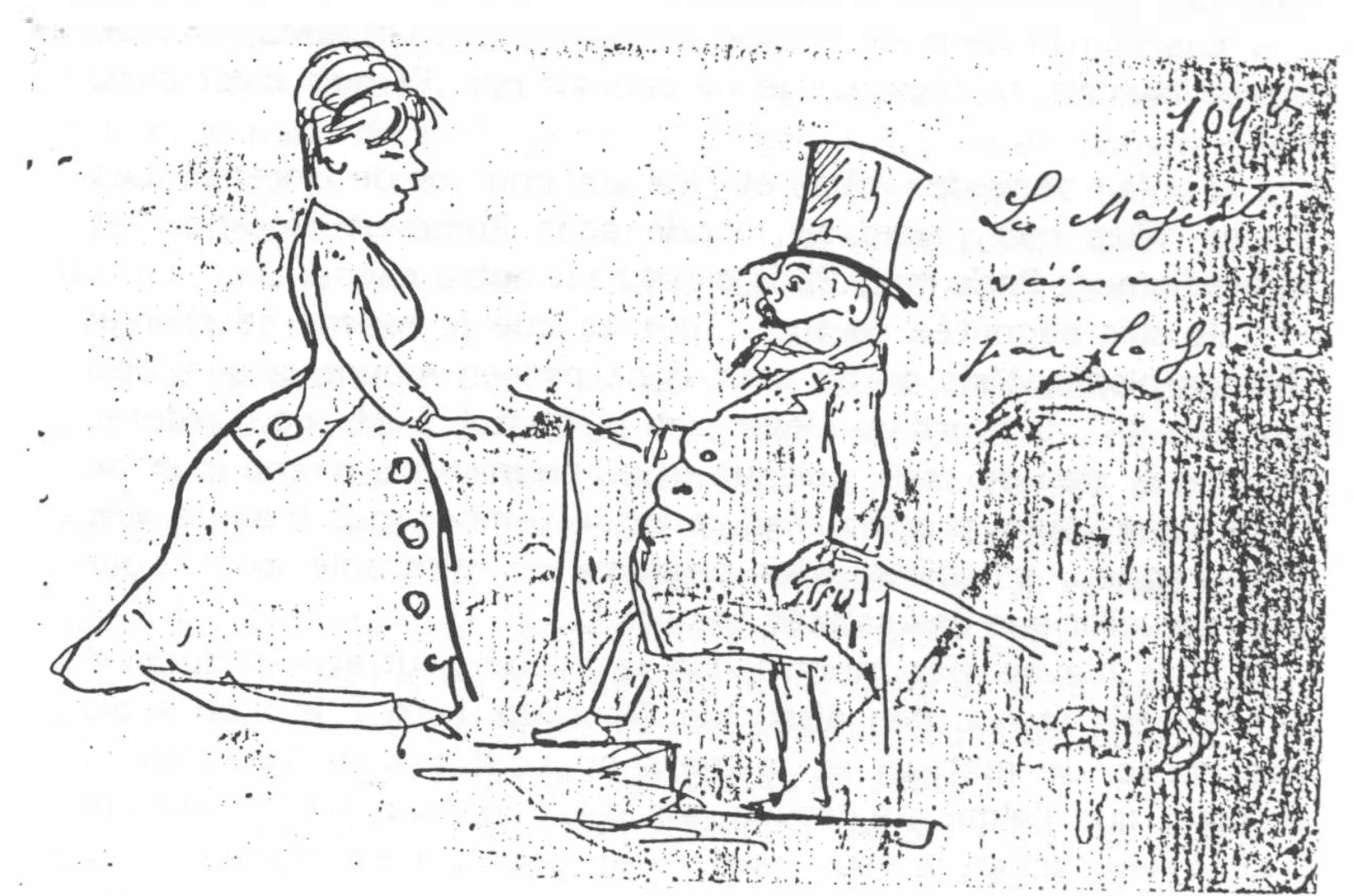
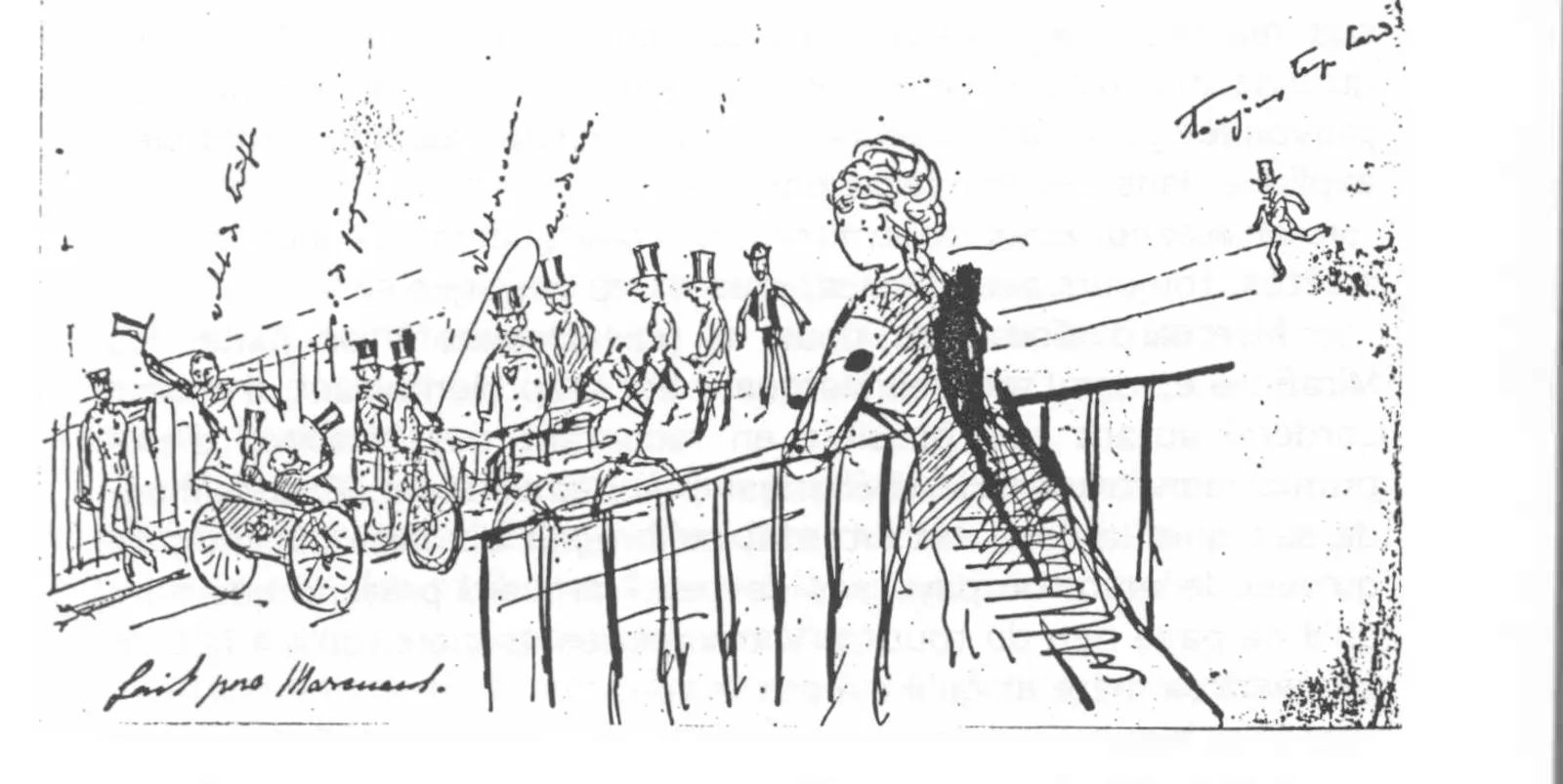
Mme Hamontoff, her daughter and her husband came, and then Marcuard. Marcuard acts on me like a sedative. As long as he is there, dashing off caricatures, smiling and saying calm, sensible things, I can still bear it, but alone!!!
Mme Hamontoff, sa fille et son mari sont venus et puis Marcuard. Marcuard agit sur moi comme un calmant. Tant qu’il est là croquant des caricatures, souriant et disant des choses calmes et raisonnables cela va encore, mais seule !!!
I have not yet taken it in, I do not believe it yet… it can only be a dream. Besides, I do not yet quite understand what I have done, what I have been told. The curious thing is that I am perfectly well, dressed and up and about, and above all that I am entirely changed in spirit: I am serious, calm, I talk about everything, I laugh. All this makes Maman cry. She thinks that I have …, that I am in a fury as I used to be. In reality I am only mortally grieved. I wanted to smash everything, and instead I went and knelt in a dark room and trembled for an hour without shedding a tear.
Je ne me suis pas encore rendu compte, je ne crois pas encore... ce ne peut être qu’un rêve. D’ailleurs je ne comprends pas bien encore, ce que j’ai fait, ce qu’on m’a dit. Ce qui est curieux c’est que je suis tout à fait bien et habillée et debout, et surtout que je suis toute changée au moral, je suis sérieuse, calme, je parle de tout, je ris. Tout cela fait pleurer maman. Elle croit que j’ai ..., que je suis furieuse comme avant. En réalité je ne suis que mortellement chagrinée. J’ai voulu tout casser et au lieu [de] cela je suis allée m’agenouiller dans une chambre sombre et trembler pendant une heure sans pleurer.
For a moment I forget myself, and then I want to rush like a madwoman to the ends of the earth!! Where to go, what to do, what is to become of me!
Un instant je m’oublie et puis je voudrais m’élancer comme une furieuse au bout du monde !! Où aller, que faire, que devenir !
I am angry with myself for having uttered words of despair over the others, but I do hope you feel the difference. I wanted to make Audiffret a second Merjeewsky, I wanted to be a Pope’s niece. But here, I loved (Book 59, 295–297)
Je m’en veux d’avoir dit des paroles désespérées pour les autres, mais j’espère bien que vous sentez la différence. Je voulais faire d’Audiffret un second Merjeewsky, je voulais être nièce de pape. Mais ici, j’aimais, (livre 59ème, 295-297)
I would like to describe how I feel, and I cannot. Dejection, sudden fits of rage, swallowed tears, surges of jealousy.
Je voudrais raconter comment je me sens et je ne sais pas. Abattement, fureurs subites, larmes avalées, élans de jalousie.
I cannot look at his visiting cards!…
Je ne peux pas regarder ses cartes de visite !...
Yesterday he brought the photographs from Sorrento, and today he is dead. It is hearing him spoken of that unnerves and enrages me.
Hier il a apporté les photographies de Sorrento, et aujourd’hui il est mort. C’est entendre parler de lui qui m’énerve et m’enrage.
— La Piccolelis will make him run up another half-million in debts, Maman said. If she knew how she has made me suffer, she would sooner have bitten off her tongue. I reread what I have written and I do not understand it, I have lapses… I cannot get over it. But I have a plan that I have given my word to carry out. It would be strange…
- La Piccolelis lui fera faire encore un demi-million de dettes a dit maman. Si elle savait ce qu’elle m’a fait souffrir, il se serait plutôt mangé la langue. Je relis ce que j’ai écrit et je ne comprends pas, j’ai des absences... je n’en reviens pas. Mais j’ai un projet que j’ai donné ma parole d’exécuter. Ce serait bizarre...
I have just calmed myself with the mandolin, which tonight gives out very harmonious sounds.
Je viens de me calmer par la mandoline qui ce soir rend des sons très harmonieux.
But is it possible?!
Mais est-ce possible ?!
And it is happening to me?!
Et c’est à moi que cela arrive ?!
Oh! certainly. Never to anyone else.
Oh ! certainement. Jamais à d’autres.
For the first time in my life I do not repent of what I have written, after thirty hours.
C’est pour la première fois de ma vie que je ne me repens pas des choses écrites, après trente heures.
In such circumstances thirty hours are enough to turn one’s ideas round and make one regret every violent thing one has said.
Dans des circonstances semblables trente heures suffisent pour retourner les idées et faire regretter toutes les violences qu’on a dites.
I am still stunned. Ah! if only he would break his neck at the Rome races.
Je suis encore abasourdie. Ah ! s’il pouvait se casser aux courses de Rome.
Marcuard and Doenhoff spent the evening talking about porcelain. It very nearly put me to sleep…
Marcuard et Doenhoff ont passé la soirée à parler de porcelaines. Je m’en suis presque endormie...
Which way to turn, what to do?
Vers quoi me tourner, que faire ?
I shall go to Florence all the same. The position is clear; I have nothing to hide from my family, so I shall not have to be troubled by what they may think.
J’irai à Florence quand même. La position est nette, je n’ai rien à cacher aux miens, je n’aurai donc pas à être ennuyée à cause de ce qu’ils pourront penser.
The young men of Naples are not charming, neither those I know nor those I do not. And then it is so bare here.
Les jeunes gens de Naples ne sont pas charmants, ni ceux que je connais, ni ceux que je ne connais pas. Et puis c’est si nu ici.
I have sent for dresses and I shall go to the Florence races. The only cities in the world I love are Rome and Florence — and Paris, naturally, but Paris is something else altogether.
J’ai fait venir des robes et j’irai aux courses de Florence. Les seules villes que j’aime au monde sont Rome et Florence, et naturellement Paris mais Paris c’est tout autre chose.
I am sick of everything. Everything I touch turns from gold to lead. But one cannot die of it, after all — and what good would it do? First, to raise a pedestal to M. de Larderel; then, no good at all, since I should not even be able to enjoy the effect I had produced. But I give up, I am disheartened… to dress, to go and produce that wretched effect, only to reap nothing but filth afterwards!…
Je suis dégoûtée de tout. Tout ce que je touche se change d’or en plomb. Mais on ne peut donc pas en mourir, à quoi cela servirait-il ? D’abord à élever un piédestal à M. de Larderel, ensuite à rien du tout, puisque je ne pourrai pas même jouir de l’effet que j’aurai produit. Mais je laisse tomber mes bras, je suis découragée... s’habiller, aller produire ce misérable effet pour n’en recueillir que des saletés ensuite !...
If I had not shown that I love him, perhaps he would have loved me. But I hid nothing. Why should I? I was not ashamed of it. On the contrary, I took pride, and still do, in showing that I love. I find it interesting, and then… I do not like hiding anything, I want to live in the sight of the people2. It amuses me.
Si je n’avais pas montré que je l’aime peut-être m’aurait-il aimée. Mais je n’ai rien dissimulé. Pourquoi faire ? je n’en avais pas honte. Je mettais et je mets au contraire de la vanité à montrer que j’aime. Je trouve que c’est intéressant et puis...je n’aime rien cacher, je veux vivre coram populo. Cela m’amuse.
It is very fortunate that I never had any serious illusions; I always said and thought that I was courting Larderel but might very well fail. Well, there you are…
C’est très heureux que je n’ai jamais eu d’illusions sérieuses, j’ai toujours dit et pensé que je faisais la cour à Larderel mais que je pouvais bien échouer. Eh bien voilà...
Well now… he seems less handsome to me at this moment… I rather fear the clouds of love will scatter and lay bare a thoroughly ugly carcass that will go by the name of affront, humiliation or something of the sort. For after all, here is a man who has flatly refused my love, judging it not worth a marriage. Oh! I know very well that but for that he would throw himself at my feet and stay there, for he has only to begin — he cannot live alone, and he is a creature of habit, as I know and as he says himself.
Tiens... il me semble moins beau en ce moment... Je crains bien que les nuages amoureux se dissiperont et laisseront voir une forte vilaine carcasse qui se nommera affront, humiliation ou quelque chose dans ce genre. Car enfin, voilà un homme qui a carrément refusé mon amour trouvant qu’il ne valait pas un mariage. Oh ! je sais bien qu’il se mettrait à mes pieds sans cela, et y resterait, car il n’a qu’à commencer, il ne peut pas vivre seul et il est l’homme de l’habitude, comme je sais et comme il dit lui-même.
That does not console me: I should not be satisfied with such a love; it is good enough for the likes of Righi and Picolellis. And besides, a day will inevitably come when he is wholly in love, or else… more probably he will wear himself out on nothing at all and marry for money and connections, like his brother.
Ça ne me console pas : je ne serais pas satisfaite d’un pareil amour, c’est bon pour des Righi et des Picolellis. Et puis il arrivera nécessairement un jour où il sera amoureux tout à fait ou bien... il est probable qu’il s’usera en rien du tout et se mariera pour argent et alliances comme son frère.
How can anyone expect women to be virtuous!!!
Comment veut-on que les femmes soient vertueuses !!!
The most tiresome thing is not being able to complain! For after all, I cannot very well complain that a man does not love me; that would be too stupid.
Le plus ennuyeux c’est de ne pouvoir se plaindre ! Car enfin, je ne puis donc pas me plaindre de ce qu’un homme ne m’aime pas, ce serait trop bête.
You see, all this depends on circumstances. Setting aside as non-existent any offence, affront or humiliation, let us simply examine whether or not I suffer from being parted from Larderel — not as a brilliant match, but as a man. Well, it depends. Let Larderel fight again, run up more debts, or simply launch himself into society and become the fashion, and I am sure I shall be mad about him.
Voyez-vous tout cela dépend des circonstances. Mettant de côté comme non existante toute offense, affront ou humiliation, examinons simplement si je souffre oui ou non de l’éloignement de Larderel, non pas comme brillant mariage mais comme homme. Eh bien ça dépend. Que Larderel se batte encore, fasse encore des dettes ou bien simplement se lance dans le monde et soit à la mode et je suis sûre d’être folle de lui.
It is astonishing how all my ideas have been turned upside down in the last hour! Could I have been mistaken again… and then the tears I shed in front of Maman, all that real grief I was not ashamed of…
C’est étonnant comme j’ai toutes les idées retournées depuis une heure ! Me serais-je de nouveau trompée.., et alors les larmes que j’ai versées devant maman, toute cette douleur vraie dont je n’ai pas eu honte...
Notes
P.P.C.: pour prendre congé (to take one’s leave) — written on a calling card left to announce one’s departure. ↩
In Latin in the original: coram populo — openly, in public view. ↩