Marie Bashkirtseff
1858–1884
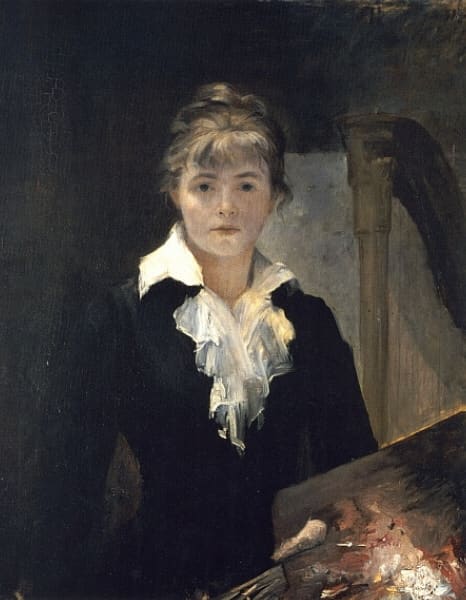
Life
Marie Bashkirtseff (born Maria Konstantinovna Bashkirtseva) was born on 24 November 1858 in Havrontsi near Poltava, Ukraine, into a family of minor nobility.
When she was two, her parents separated. She traveled across Europe with her mother and relatives — Germany, the Riviera — before settling in Paris. She was privately educated and spoke French, English, Russian, and Italian.
She originally aspired to become an opera singer, but tuberculosis damaged her voice. She died in Paris on 31 October 1884, at just 25 years old. Her tomb at Passy Cemetery is a replica of her studio and is a French historical monument.
Artist
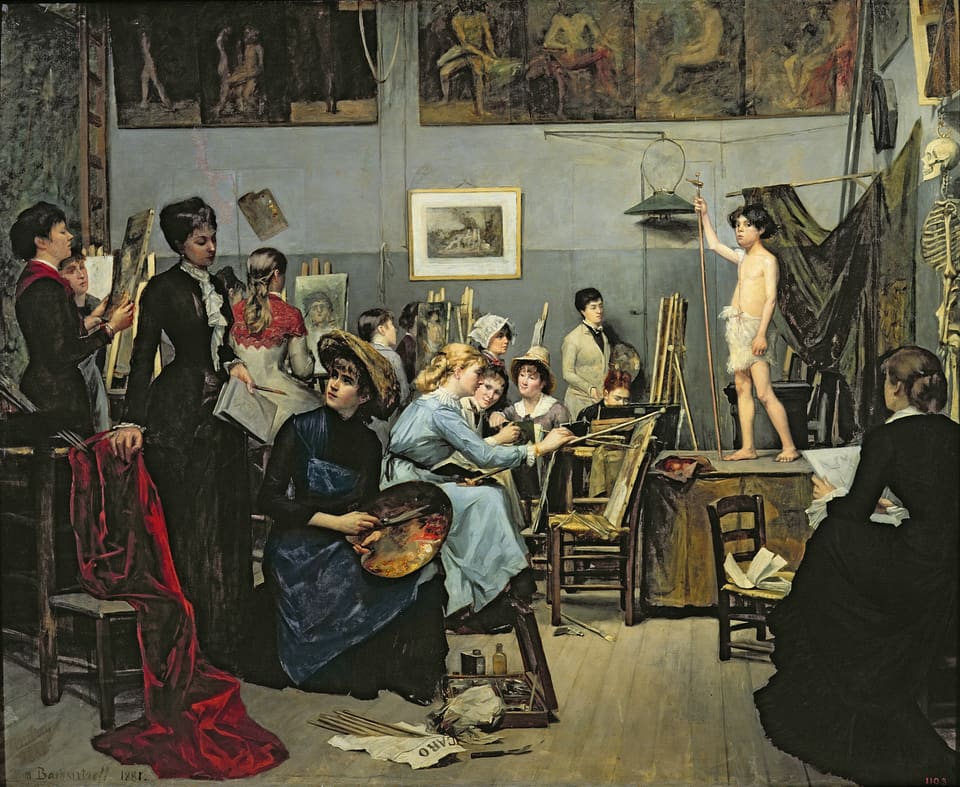
From 1877 she studied at the Académie Julian in Paris, one of the few schools that accepted women. Her teachers included Tony Robert-Fleury and Jules-Joseph Lefebvre. She exhibited at the Paris Salon from 1880.
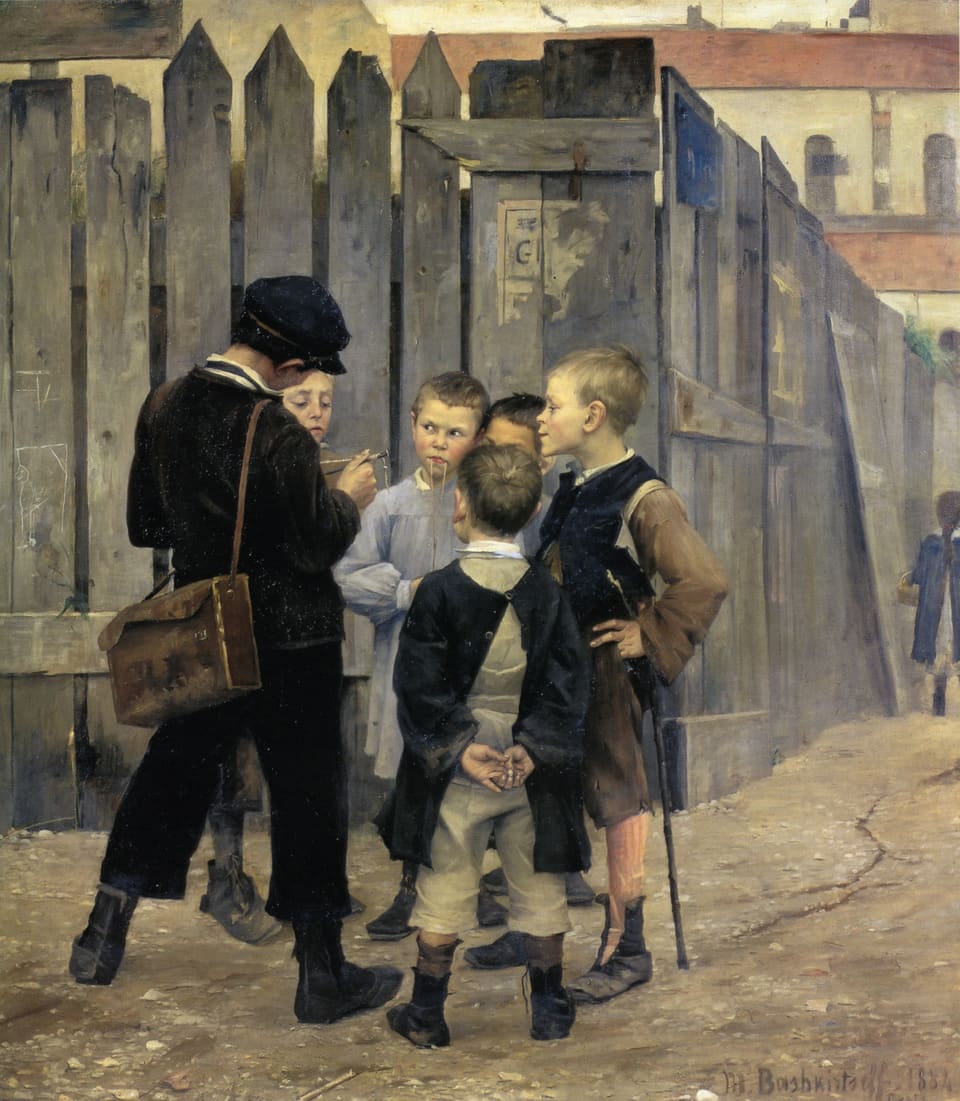
She created approximately 230 works, most of which were destroyed during World War II. Her most famous paintings — 'The Meeting' and 'In the Studio' — capture urban life with naturalistic precision. She was a student of Jules Bastien-Lepage and a pioneer of urban naturalism.
The Diary
From age thirteen she kept a diary — 105 notebooks, approximately 19,000 handwritten pages. She wrote primarily in French, but also in Russian, English, and Italian.
After her death, her mother published a heavily censored version (1887). Only in 1995–2005 was the complete text published in 16 volumes by Cercle des Amis de Marie Bashkirtseff.
“I will be famous or I will die.” Je serai célèbre ou je mourrai.
Feminism
Marie wrote articles for the feminist newspaper La Citoyenne under the pseudonym 'Pauline Orrel'. She criticized the exclusion of women from the École des Beaux-Arts and the inability to freely visit museums.
'I know that I should become somebody; but with skirts — what can one do?'
Legacy
Her diary influenced generations of writers — Anaïs Nin, Katherine Mansfield, Mary MacLane. Simone de Beauvoir drew on it for The Second Sex.
British Prime Minister William Gladstone called it 'a book without a parallel'. George Bernard Shaw was an admirer.