❦
Tuesday, 9 June 1874
Mardi, 9 juin 1874
The deacon is already here; he has invited himself1 to come and hear Mass. This wretched priest is intoxicated with himself; he assumes airs of a spoiled child, of all that is most adorable in the world, and for all that he is one of the most tedious beings I have ever met. He even forgets himself often -- for example, he sends Paul to buy him cigarettes. I blushed ten times with anger.
Le diacre est déjà ici, il s’est imposé pour aller entendre la messe. Ce misérable prêtre est enivré de lui-même; il prend des airs d’enfant gâté, de tout ce qu’il y a de plus adorable au monde et avec cela est un des êtres les plus fastidieux que j’ai jamais rencontré. Il s’oublie même souvent, par exemple, il envoie Paul lui acheter des cigarettes. J’ai rougi dix fois de colère.
I believe (white Worth dress, hair loose, not bad, I believe) that for the first time I was not late. The audience is very mixed, too mixed; I did not see a single Christian face except the Vicomtesse Vigier, who is painted delightfully.
Je crois (robe blanche Worth, cheveux flottants, pas mal, je crois) que pour la première fois je n’étais pas en retard. Le public est fort mélangé, trop mélangé; je ne vis pas une face chrétienne exceptée la Vigier qui est peinte à ravir.
What shall I say, poor little ignorant creature, about the Requiem Mass? I do not feel strong enough to criticise. It is very beautiful, extremely beautiful, admirable, but it could have been still more beautiful. I should like to hear it several more times; a piece of music so serious is not understood or judged in a single hearing. There are several passages that escaped me and that I rediscover only now.
Que dirai-je pauvre petite ignorante, de la messe de requiem ? Je ne me sens pas de force pour critiquer. C’est très beau, extrêmement beau, admirable, mais cela aurait pu être encore plus beau. Je voudrais l’entendre encore plusieurs fois, une pièce de musique aussi sérieuse, ne se comprend et ne se juge pas en une fois. Il y a plusieurs passages qui m’échappèrent et que je retrouve seulement maintenant.
Verdi on entering was greeted by frantic applause. It excites me like the races (not one passable face in the choir). I listened attentively to Woldmann and Stoltz, for it is known that once I had some pretensions of my own. For nearly a year my voice has been travelling like “The Three Musketeers,”4 but I believe that at this moment it is beginning to return. Stoltz makes too great an effort to sing; she looks as if she were ploughing a field rather than singing.
Verdi en entrant fut accueilli par des applaudissements frénétiques. Cela m’excite comme les courses (pas une face passable dans le chœur). J’écoutais attentivement la Woldmann et la Stoltz car on sait que jadis j’eus quelques prétentions. Depuis presque un an ma voix fait des voyages comme « Les trois mousquetaires », mais je crois qu’en ce moment elle commence à revenir. La Stoltz fait de trop grands efforts pour chanter, elle a l’air de labourer la terre et non de chanter.
It was a memorable matinee; perhaps I shall be able to boast one day of having heard this mass of Verdi’s sung for the first time in Paris. The heat was excessive, and as soon as we returned we undressed5. A telegram. What is it? A thousand francs sent by my aunt -- it is still something when one does not have too much. “Rest... rest... eternal rest6!!” Maman was looking out the window, then turning: “Suppose we went to the Bois.” I was about to propose it.
C’est une mémorable matinée, peut-être pourrai-je me vanter un jour d’avoir entendu la première fois à Paris chanter cette messe de Verdi. Il faisait une chaleur excessive et aussitôt rentrées nous nous spogliamo. Un télégramme. Qu’est-ce ? Mille francs qu’envoie ma tante, c’est tout de même quelque chose quand on n’a pas trop « Requiem... requiem... Requiem eterno » !! Maman regardait par la fenêtre puis se tournant: « Si nous allions au Bois ». J’allais le proposer.
So we go. I am pretty at this moment; I put on Maman’s white muslin dress -- it suits me; in the carriage the length does not show. My straw hat, hair half pinned up, some short curls on the nape (natural). I am pleased with myself, very grateful to my aunt.
Nous y allons donc. Je suis jolie en ce moment, je mets la robe de mousseline blanche à maman, elle me va bien, en voiture la longueur ne paraît pas, mon chapeau paille, cheveux demi retroussés, quelque boucles courtes sur la nuque (naturelles). Je suis contente de ma personne, très contente à ma tante.
But at the Bois I behave like a fool. As soon as we reach the level of the infantry post, the devil drives me; I turn, I catch sight of Fedus -- or merely his grey hat -- and I begin to blush, more from anger that I am blushing than from anything else. To avoid seeing that face I turn my eyes to the side:
Mais au Bois je me conduis comme une sotte, aussitôt arrivées à la hauteur du poste des chasseurs à pied, le diable me pousse, je me tourne, j’aperçois Fedus ou seulement son chapeau gris, et je commence à rougir plus de colère, que je rougis que d’autre chose. Pour ne pas voir cette face je tourne les yeux de côté:
-- You see, Maman, there I go blushing7 -- what a horror.
- Tu vois, maman, voilà que je rougis, quelle horreur.
-- Yes, still, and how! And he is looking at you at the same time8.
- Oui encore et comment, et il te regarde en même temps.
It is exasperating! So I promise myself revenge at the next outing. We meet Princess Souvoroff, and her daughter on horseback with the obliging gentleman, M. Zveguinzoff. We stop our carriages. She called on us at the Hotel Scribe when we were no longer there. It is a pity; she leaves the day after tomorrow, but this charming person has promised to send a little note to say when she is leaving for certain. She also recommended a tailor for riding habits, next door to us -- Alfred.
C’est exaspérant ! Aussi je me promets une revanche à la prochaine promenade. Nous rencontrons la princesse Souvoroff, sa fille à cheval avec l’homme commode, M. Zveguinzoff. Nous arrêtons nos voitures. Elle a été chez nous à l’hôtel Scribe lorsque nous n’y étions plus. C’est dommage, elle part après-demain mais cette charmante personne a promis d’envoyer un petit billet pour dire quand elle part pour sûr. Elle recommanda aussi, un tailleur pour amazone, à côté de nous, Alfred.
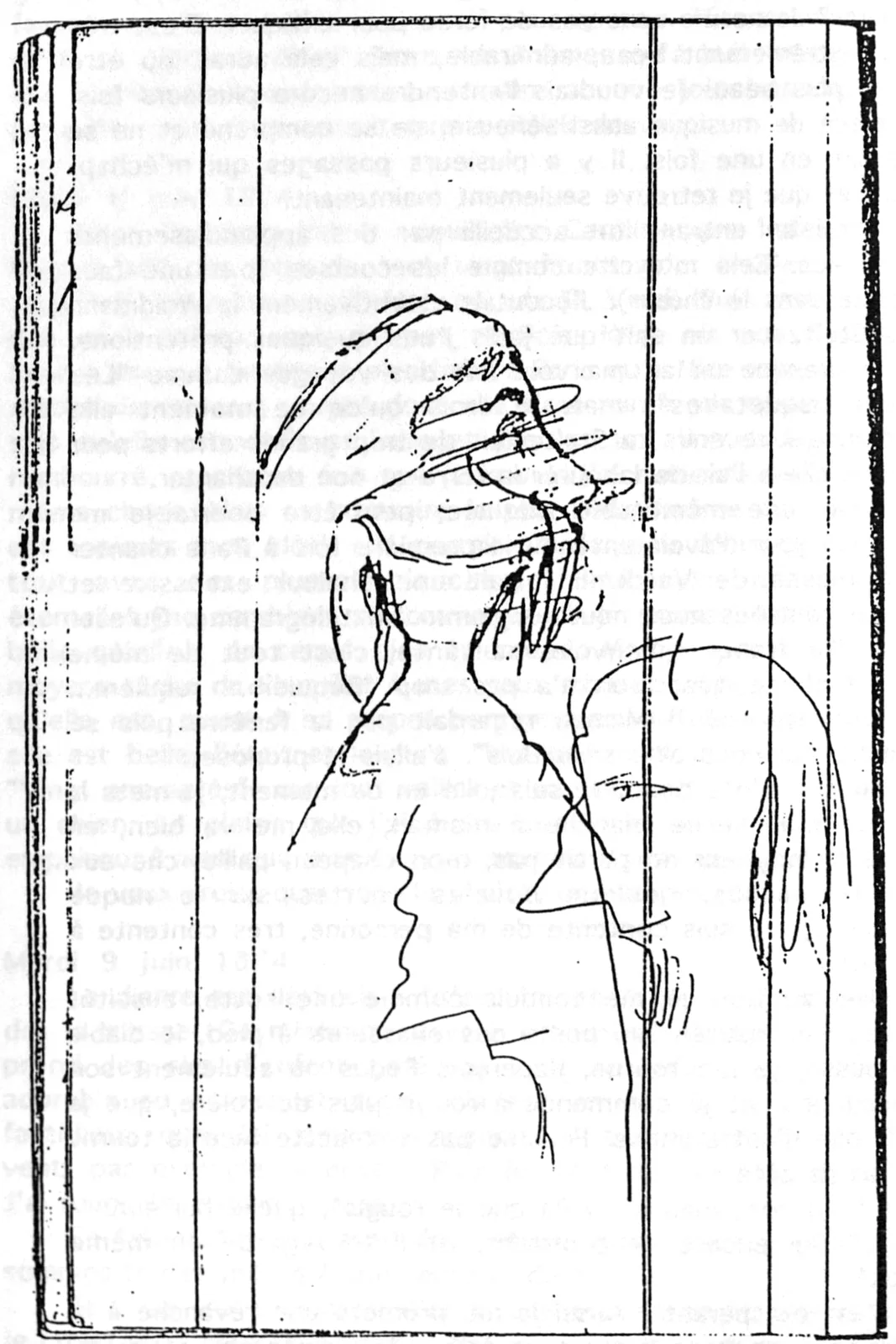
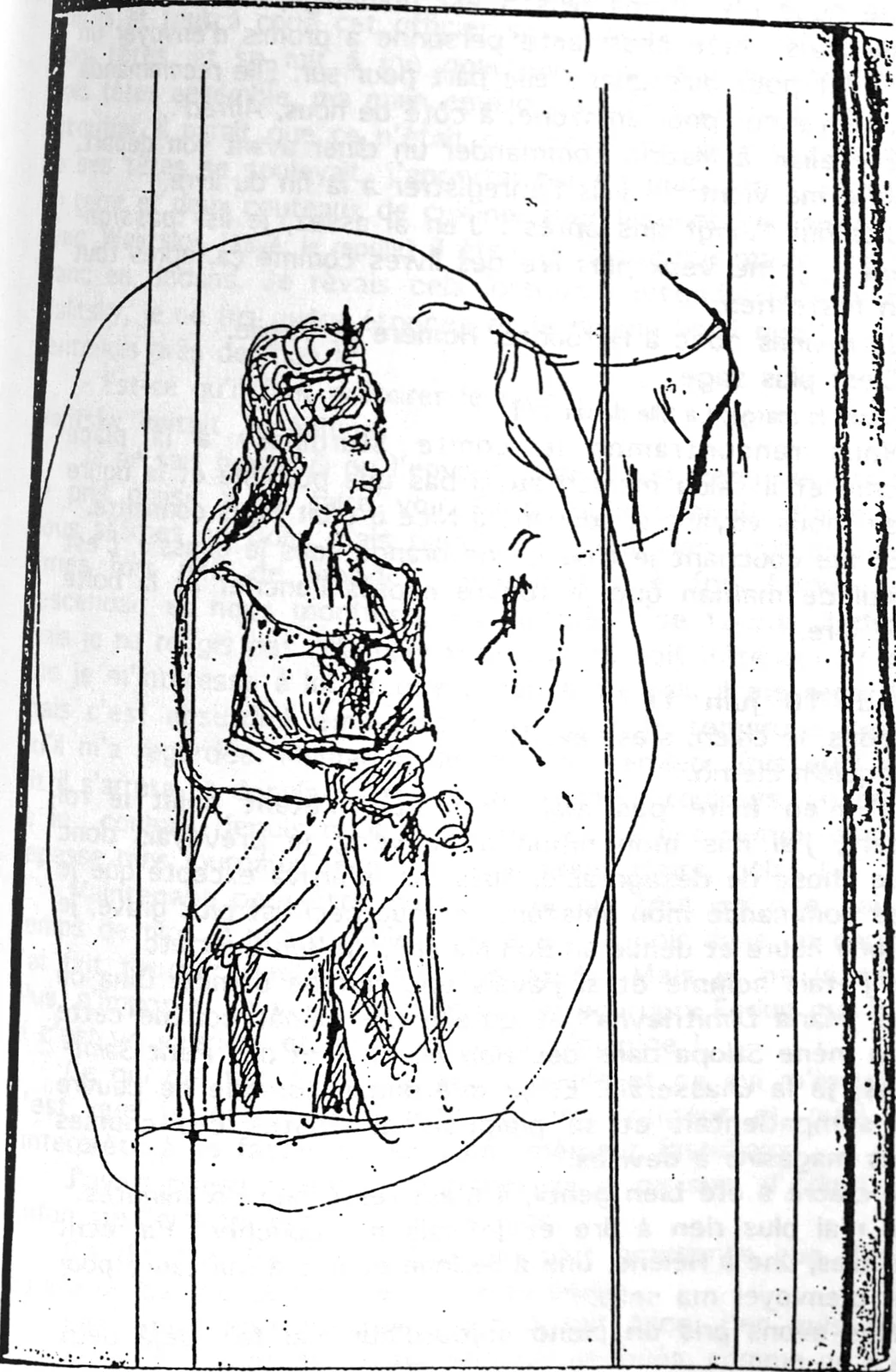
She was going to the Madrid to order a dinner before her departure. An idea comes to me; I shall record it at the end of the book.
Elle allait à Madrid commander un dîner avant son départ. Une idée me vient, je vais l’enregistrer à la fin du livre.
J’ai fini « Vingt ans après ». J’en ai assez, je lis passionnément, je ne veux plus lire des livres comme ça, après tout il n’en reste rien.
So I am going back to Herodotus, Homer, and Virgil.
Je reviens donc à Hérodote, Homère et Virgile.
It is wiser.
C’est plus sage.
in the margin
The daughter of one one.
dans la marge La fille de un un.
We met Count Starginsky in the place Vendôme, and he bowed to Maman as low as possible and with a beaming face; seeing us so often in Nice, he thinks he knows us.
Nous rencontrâmes le comte Starginsky à la place Vendôme et il salua maman aussi bas que possible et la figure joyeuse, nous voyant si souvent à Nice il croit nous connaître.
On going to bed I find an orange under the cushion; it is so sweet of Maman that I open the inkwell and the box again on purpose to say so.
En me couchant je trouve une orange sous le coussin, c’est si gentil de maman que je rouvre exprès l’encrier et la boîte pour le dire.
Notes
Written in Russian in the manuscript; French translation by the editor. ↩
Written in Russian in the manuscript; French translation by the editor. ↩
Written in Russian in the manuscript; French translation by the editor. ↩
In French in the original: Les trois mousquetaires. ↩
In Italian in the original: spogliamo (“we undress”). ↩
In Latin and Italian in the original: Requiem... requiem... Requiem eterno -- Marie’s Italianised echo of the Latin requiem aeternam (“eternal rest”) from the Requiem Mass; she uses it playfully about money. ↩
Written in Russian in the manuscript; French translation by the editor. ↩
Written in Russian in the manuscript; French translation by the editor. ↩
In French in the original: Vingt ans après. ↩
Written in Russian in the manuscript; French translation by the editor. ↩